20.07.2026
An untouchable beauty in the Atlantic: The Portuguese Man o’ War
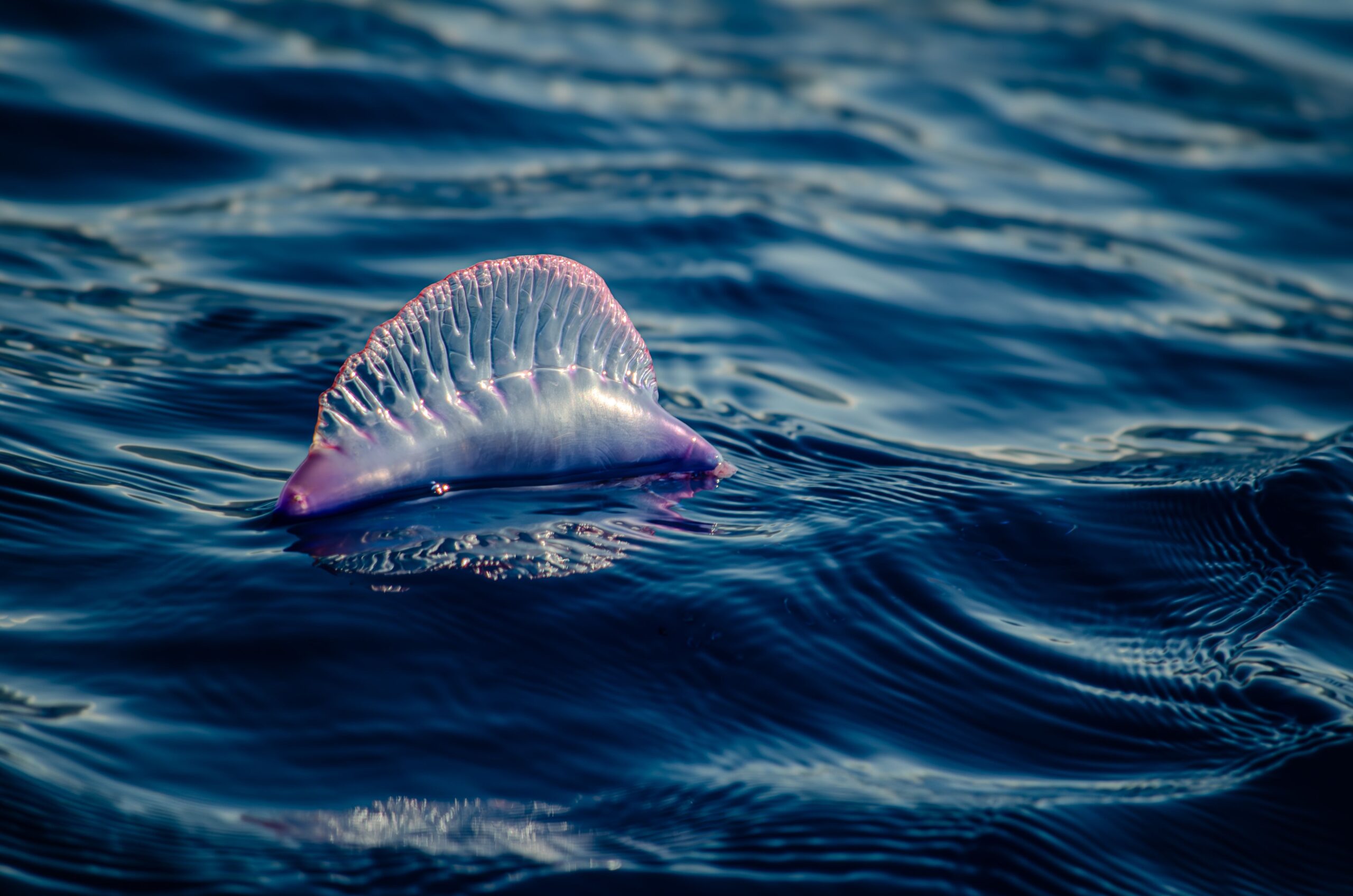
Walking along the beaches of São Miguel always holds surprises dictated by the tides. In the spring months and early summer, the winds and currents wash small translucent balloons in electric shades of blue, pink, and violet ashore, bringing to the beach one of the ocean’s most fascinating and feared organisms: the Portuguese man o’ war.
Although they share visual similarities with common jellyfish, Portuguese men o’ war are actually complex colonies of tiny organisms that survive together.
They drift at the mercy of the currents, propelled by the wind striking their sail-like crest, a characteristic that inspired the comparison with the ancient vessels of Portuguese navigators and gave rise to their name. Their fragile beauty coexists with a highly effective defense mechanism, tentacles that conceal strong toxins and demand absolute respect from those who share the sea with them.
Finding one of these creatures on the sand offers a singular moment. Instinct often begs us to touch or closely examine the unusual texture, but Micaelense wisdom teaches us that this admiration and contemplation of the shape, the colors, that incredibly electric blue right there on the almost black volcanic sand, must always happen at a safe distance, even when we find the said man o’ war out of the water.
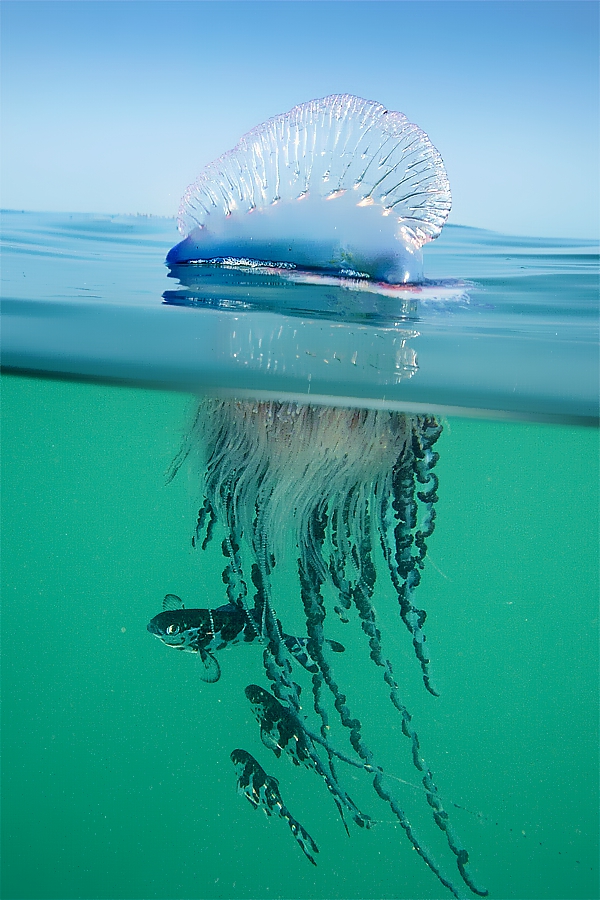
They are, without a doubt, fascinating species that, with all their splendor, contain within themselves infinite stories of all the tiny organisms that constitute them, thus making them more fertile, magnificent, and, unquestionably, precious than those that each could create individually.
Finding a Portuguese man o’ war inevitably reminds us of how wild, deep, and rich the Atlantic is, an ocean with its own rules, not ours, that is a vibrant, untamable, and immense ecosystem, so immense that it sometimes brings to the surface this beauty of being electric, but also of being together.
Perhaps there’s something to learn from ourselves.