08.10.2026
Color in the folk architecture of São Miguel: a hand-painted identity
Beyond the vastness of the landscapes and trails of São Miguel, there is a main character that goes unnoticed in typical itineraries. When passing through parishes like Ribeira Grande, Povoação, or Rabo de Peixe, the folk architecture of São Miguel counters the harshness of the basalt with a completely unexpected catalog of tones. Instead of a green and gray color palette, we see a blend that is as rich as it is intentional.
On this island where the weather is, let’s admit it, often gray, the houses brighten the landscape of those days with color on color, featuring unlikely combinations that rival the Pantone pairings of the most audacious of creatives.

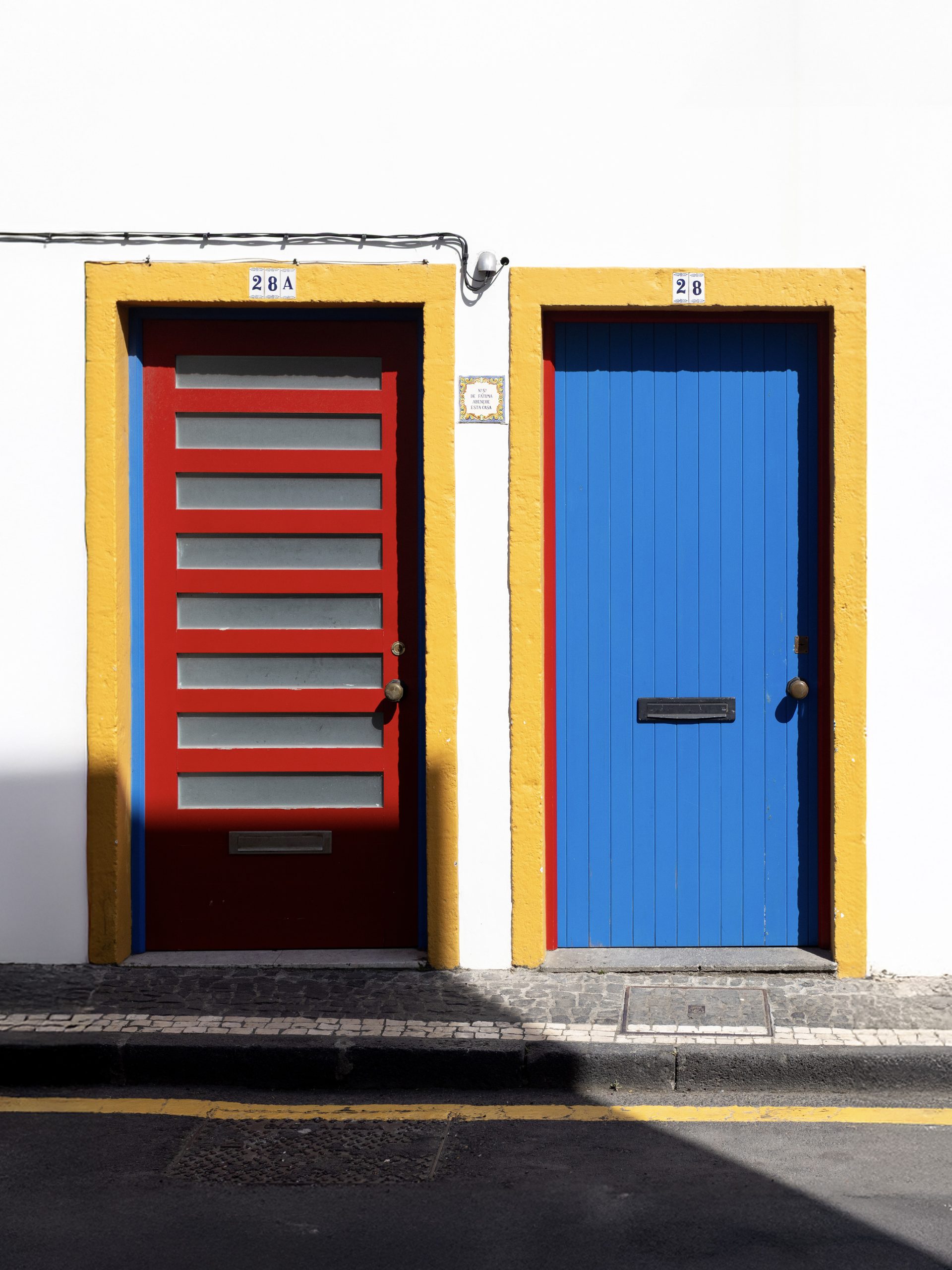
The traditional Azorean home in these areas is rooted in simple architecture. Built on narrow lots and pressed together “gable-to-gable” (sharing a party wall with neighbors), they form an unlikely succession of facade colors. And it is precisely in this continuity that the magic of color finds its purpose. Through a play of contrasts, where the dominant paint of the facade is broken up by vivid tones applied to the trims, door and window frames, and shutters, each house is the face of a unique universe.
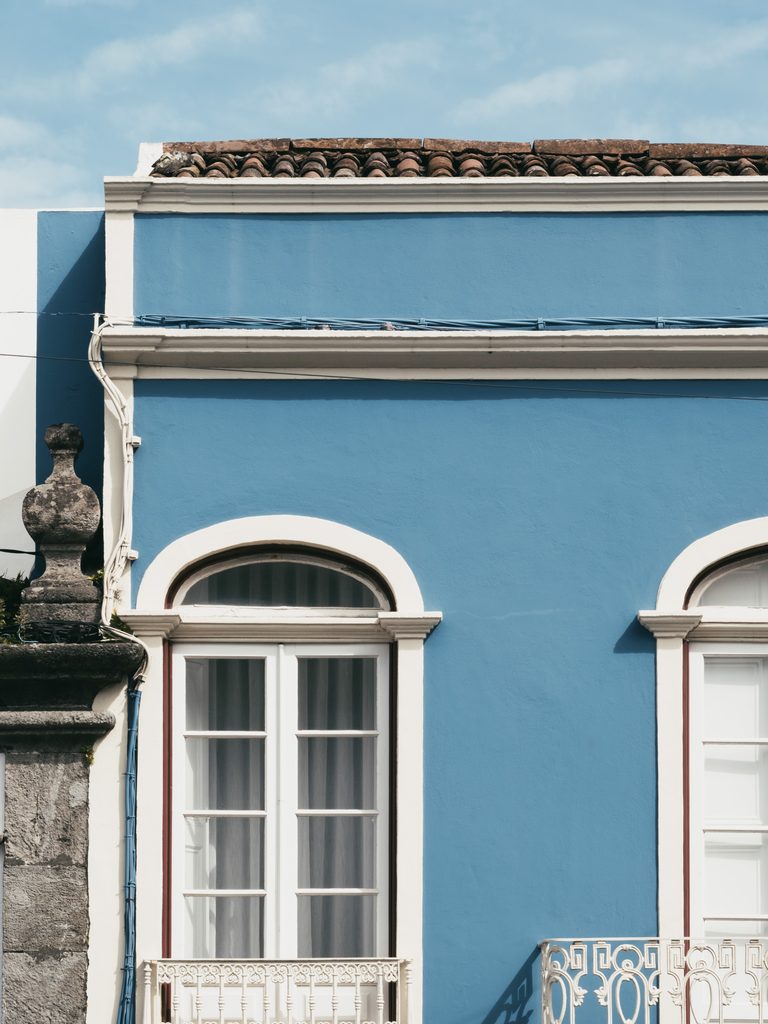
It is an island that rejects what our friend, Mariana Lopes, photographer and architect, describes as “chromophobia”, the Western idea that white is and should be the primary architectural reference color. An anthropological perspective suggests that for historically rural families without great financial means, color became the primary tool for individualization, allowing them to stand out in the street’s alignment. Each house is a joyful chaos of color, impossible to miss and, in our view, impossible not to appreciate. Folk architecture thus gave rise to a method that is as practical as it is beautiful, adding yet another layer of charm to São Miguel. This preference for striking colors is very likely historically linked to the emigration from São Miguel to Brazil, which, alongside the cross-border experience, brought back the influence of warm South American colonial colors and adapted them to the island reality, previously heavily defined by the neutral and gray tones of basalt stone.


Those who cross the Atlantic always take the island with them, and those who return never arrive empty-handed. The return to the island-home brings new ways of seeing the world, and the street, the facade, the exterior of the home thus became the perfect canvas to host this luggage full of lasting experiences, ready to be shared with others.
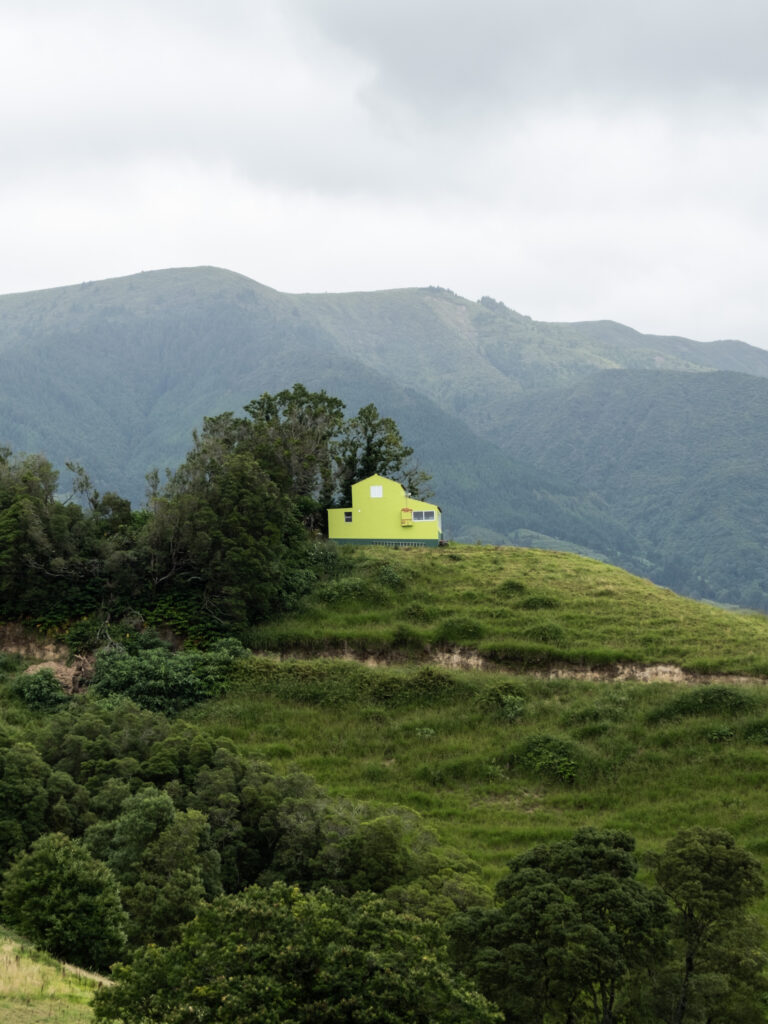
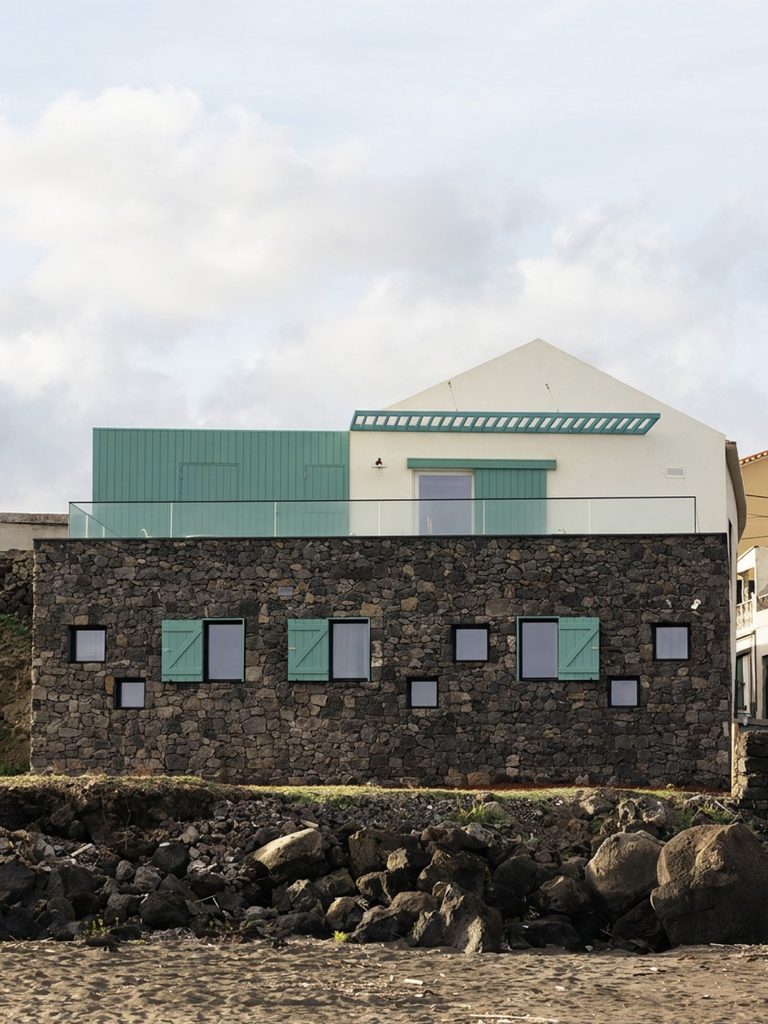
But this influence doesn’t stop here. Even we have decided to take a chance on color. Inspired by references from architect friends of Ilhéu Atelier, and by Mariana photography for the branding of the 2026 edition of the festival Tremor, which proposes the intersection of art, territory, and community on the island, and, faced with the need to choose a new color for the iron structure of the Moinho da Areia terrace, we replaced the minimalist white, already corroded by the saltpetre of the nearby beach, with an open, free, pop green, as a declaration of affection for Azorean vernacular architecture.
When you go to São Miguel, set aside time to stroll through the streets and alleys of these cities and towns and try counting the number of different colors and color combinations you see. It is an excellent opportunity to see these little cosmos of dark green, emerald green, turquoise, tangerine, coral, mimosa yellow, classic blue, or sky blue. Don’t tell them we told you so, but they are proof that the micaelense charm reaches every corner of the house. It was precisely inspired by this way of being, so typical of those unafraid to take risks, that we let the colors of the facades and our new terrace overflow into The Art of Living, the new t-shirt collection by Moinho da Areia.
Until then, long live pop green, which screams on sunny days but warms on cloudy days and is more micaelense, without a doubt!